The spirit of storytelling
Lay down any preconceptions of single malt whisky, pour yourself a dram and join us on an adventure into a world of ghostly apparitions, bygone distillers and blood pudding galore; this is marketing as you’ve never seen it before
“The Royal Brackla distillery has been around for 200 years,” laments John Dewar & Son’s Global Malts Marketing Manager, Stephen Marshall. “And now I’m late.” Sarcasm aside, the creation of an entire portfolio of single malt whiskies within a company renowned for their blending capabilities never was going to be quick or easy. What matters, though, is that it’s happened at all.
You see, some time ago Marshall paid a visit to the employees at Royal Brackla. It’s a quiet affair situated in the Scottish Highlands amidst the sunbathed Cawdor Moss through which the River Nairn winds its pass. Times must have changed; it’s difficult to imagine that these grounds were reputedly once made famous by Shakespeare in Macbeth.
Looking out from a bridge over the distillery’s serene water garden Marshall was met with concern, not from witches but a troop equally intent upon the future: “Do you think you’re going to release the malts?” the distillery employees asked. “Definitely,” Marshall replied. “Why?” Expecting this the employees avowed they had been promised the release five times previously. Their own whisky was a product exclusive to blending.
“Fucking hell, that must have hurt,” Marshall exclaims, sympathising with the employees’ frustration at not being able to drink their own dram at their local pub. “So at that point I decided I had to do it – I had to get the malts out at last.”
And so it was that a powerhouse blender of quality Scotch whisky turned its gaze inward to its own people, past, places and its own products, and decided the time was right to embrace the potential of a whisky category once entirely overlooked and today seen by some as somewhat staid: single malt.
Sold! to the blender over there
Scotland is currently home to a vast amount of whisky. Suffice it to say that there are more casks of maturing whisky in Scotland than people. Considerably more. And don’t assume each distillery’s product is for its own use: “The bartering system is the crux of the whisky industry,” says Marshall of the trading network in constant motion behind the scenes. Speaking of Aberfeldy, another of Dewar’s own distilleries, he says: “Look at the capacity – it’s 2.4 million litres. We don’t sell that much of it and we don’t use that much of it. The majority is made to swap with other companies in order to make our blends.”
This is common practice in the industry, and it’s absolutely necessary to ensure consistency. Blended whisky accounts for some 75 per cent of all bottled Scotch, and, as such, blends – very often based on centuries-old recipes – cannot deviate from expected norms. Should a blending house require a certain quantity of a certain style of whisky, it’s off to market they go.
Blending whisky is nothing short of an art. Of course, some do it better than others, but its overall significance cannot be understated. That some blends consist of 20, 30, even 40 individual whiskies is an admirable, if baffling, fact. Where single malt whiskies are considered soloists, blended whiskies are entire orchestras with individual whiskies playing in harmony, often to wonderful effect.
Here’s the catch, though: transparency. Blend recipes are practically always closely guarded secrets, for the eyes of master blenders alone, and as such it’s quite impossible to know exactly what’s in your glass.
“The bartering system is the crux of the whisky industry… the majority is made to swap with other companies in order to make our blends”
Single malt whisky, on the other hand, thrives on transparency, particularly in relation to provenance. To sample a single malt whisky is to sample the product of a single distillery, and in turn experience the gamut of local influences which have been at work upon it, however subtle, from landscape to glass.
The existence of provenance is a topic of considerable contention in the world of whisky. Producers flaunt it while many refute its significance, yet there’s absolutely a case to be made for the existence of something more than just alcohol, respectability and money at the heart of single malt whisky. And it looks as if the more creative producers have finally started making it.
Around the campfire
“The bourbon guys are really good at telling the stories behind their brands,” says Mark Gillespie, host and executive producer of WhiskyCast. “You get these brilliant stories, these legacies of generations of families working in the distilleries, and these great voices telling the stories of their whiskies.” One look at the labels like ‘Wanted’ posters adorning bottles of bourbon and you’re through the swing doors of a saloon, or around a campfire toasting one of the frontier distillers. Tequila has a similarly romantic ability, conjuring up images of desperados swigging hot nips on horseback, telling the story of a family-driven spirit with traditions reaching back centuries. “Storytelling adds authenticity and character in a way that you don’t get from somebody talking about their vodka,” says Gillespie. Yet in Scotland, we’ve not had the same offering. We’re blessed with the stories for certain, but the telling is too often left behind, and that’s something Marshall and his team vowed to rectify in the project that became The Last Great Malts.
“I couldn’t give a fuck who was king whenever,” says Dewar’s Marshall, a one-time student of history. “But things that were happening musically, cinematically, culturally, socially, that’s the interesting stuff, and it’s all relevant to whisky, because whisky is steeped in storytelling. That’s the big thing.” After all, it is well to remember the deeply human nature of storytelling, and indeed that of our own attraction to the so-called water of life. If, as Philip Pullman once said, storytelling followed nourishment, shelter and companionship as life’s great necessities, then its time-honoured bedfellow whisky probably never was far off.
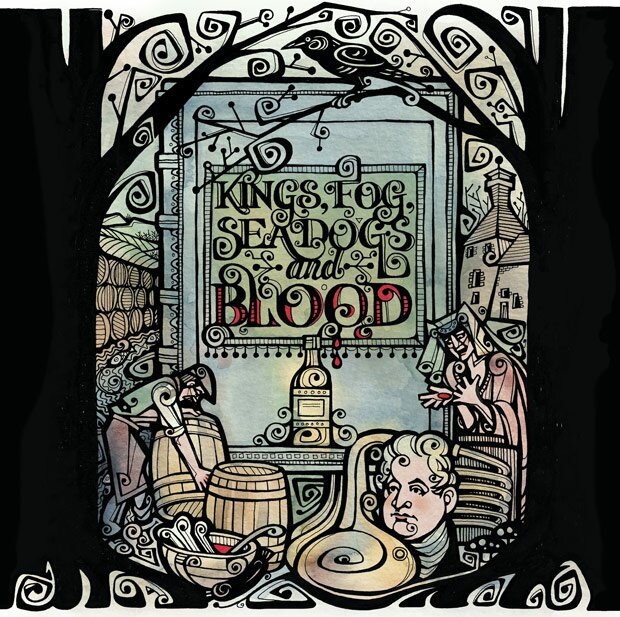
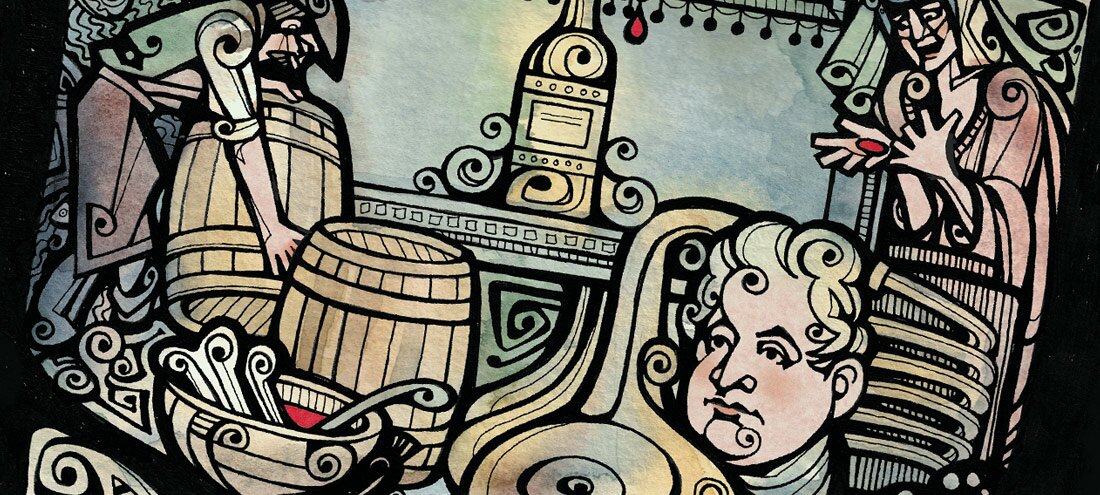
Of kings, fog, sea dogs and blood
The Last Great Malts portfolio consists of five single malts (Royal Brackla, The Deveron, Aultmore, Craigellachie and Aberfeldy), all of which have, for decades, been hailed as top quality by blenders. As such, getting hold of them has been no easy task; save Aberfeldy, The Deveron and a few independent bottlings of the others, they’ve only ever been available to blenders. “They didn’t exist as brands,” says Marshall. “There were the distilleries and the liquids, but no brands. And when you’ve got independent bottlers doing random bottlings, and each one looks, feels and tastes different, the brands don’t exist.”
Because of this, and the fact that Dewar’s five distilleries were relatively unknown, tapping into the heritage of each was essential. “That was the natural history approach,” says Marshall. “We were working on research, gathering all of the authentic stuff, seeing what awards we’ve won, who owned the distilleries etc. And then we got oral histories from the places and the people. You start shaping the brands, and matching the characters with the liquids to develop personalities.”
Enter the area known as the Foggie Moss, home to the Aultmore distillery, and you’ll realise what Marshall’s getting at. Veiled in thick fog, this isolated and eerie landscape was perfect for the once-illicit production of whisky, and although the whisky produced therein today is done so legitimately, it seems strangely influenced by its immediate, alien terroir; it’s a smooth, grassy and elusive rarity born of fog, bog and brimming burn.
Craigellachie is similarly imbued with a sense of place. The distillery sits atop a stubborn bluff in the heart of Speyside, bellowing sulphurous plumes from its external worm tubs, a bygone method of condensing which gives the distillate an unapologetically sulphurous, meaty taste. “Craigellachie’s personality is like that,” says Marshall. “It’s cantankerous. The folk who built the distillery and work in the distillery are not soft folk, they’re quite hard, and the whisky is like that. It’s not an easy dram.” It’s little wonder the folk are that way, for the distillery’s original owner, an advocate of hearty nutrition, insisted they tuck into a mixture of his own creation named ‘BBM’ – blood, bone and meal.
Royal Brackla is a distillery equally rich in history, and its royally warranted whisky now reflects that. “Royal Brackla has a regal, military history. The whisky, though, didn’t match the character straight off, so we sherried it. King William IV, who gave the royal warrant, was a sherry drinker. You have to ask, ‘Is this the dram the king would have drunk?’ It was called the ‘King’s Whisky’, and he would have drunk it with his pals, so we tried to get into that space by creating a rich, opulent liquid.”
“It’s cantankerous. The folk who built the distillery and work in the distillery are not soft folk, they’re quite hard, and the whisky is like that. It’s not an easy dram”
Ghostly apparitions of drenched rubber boots following distillers home, still-house cats who knew when whisky was ready, salty sea dogs and a river of gold all further contribute to the marvellous tapestry of tales and legends which surrounds and reflects the whiskies of The Last Great Malts range. “There’s always a connection between place and liquid,” explains Marshall, “and it doesn’t take a genius to tie that into a brand.”
Beyond the spirit
As the distillers at Royal Brackla confirm, such a project doesn’t take place overnight. “At the time I don’t think I understood what we were doing,” says Marshall. “We needed to know more about consumers, so there were about 4,000 interviews done around the world, and the single malt category was split into six. It allowed us to look at how consumers interact with brands, meaning we could create brands that we knew people would love. It gave us confidence in the project; it validated the work we instinctively knew was right.”
It also needs purpose, and it would be naïve to refute the importance of growth here. “Most companies out there are looking for organic growth,” says WhiskyCast’s Gillespie. “If you’re trying to grow your share of the market, you have to do it organically.” And Dewar’s, being in possession of five distilleries, each producing high-quality single malts, were frankly well placed to this end.
Yet organic can go beyond material assets; Dewar’s have realised the existence of something far more inherent living within the walls and environs of their distilleries, something that can only be developed organically, and which has the ability to breathe life and brand into single malt whiskies when treated with respect. “People want the origin stories behind whiskies,” says Gillespie. “They want to know what they are drinking. They want more than just the whisky inside the bottle; they want the story, the authenticity, the DNA. They’re not looking for the Fireball [the notorious whisky liqueur] experience where they go out and get blasted. There’s no story to that. They’re looking for a shared, unique experience.”
“My ego also drove things a little bit, I can’t lie,” admits Marshall, the one for whom making this entire project a shared, unique experience was most important. But often that’s what’s needed, and if anyone was going to give a project like this a push, it was him. “All that has to happen is a CEO to change and decide not to do single malts. But the folk within Bacardi [Dewar’s parent company], they like single malts, the family included. They were aware, they just wanted someone to do it.” And that’s what the team did. “[The single malts] didn’t exist as brands but now they each have a personality, a way of drinking, and a very clear, readable history. They are now brands, and I’ll be long gone but they’ll still exist,” he says, knowing that Dewar’s single malts are at long last being celebrated in their own right.
“People want more than just the whisky inside the bottle; they want the story, the authenticity, the DNA.”
Whisky can be so much more than the sum of its parts, a sentiment best expressed by the authors Neil Ridley and Gavin Smith in their book Let me tell you about whisky: “At its most prosaic, whisky is simply distilled grain, but given a dram or two of the stuff itself, the brain is apt to be less literal. Then whisky becomes the greeter of guests, the cementer of friendships, the centrepiece of convivial gatherings, the accompaniment to contemplation.” It becomes, in short, a story in itself, and one destined to live on as producers of single malts embrace the singularities of their people, pasts, places and products. These may be the last great malts for Dewar’s, but it’s only the first chapter in an entire saga of whisky long known, yet still to be told.