Altered in Amazonia
Alcohol plays a vital role in shamanic rituals across the world, as our man in Ecuador discovered during a heated encounter with the local firewater on entering the House of Visions
I
jumped at the chance to meet a real, live Amazonian shaman, and like any good writer, I did my research thoroughly beforehand. Standing in a hut in my underpants in the Ecuadorian jungle, however, I feel woefully unprepared in spite of all my reading, and twist my fingers nervously behind my back as I wait to be shamanically cleansed.
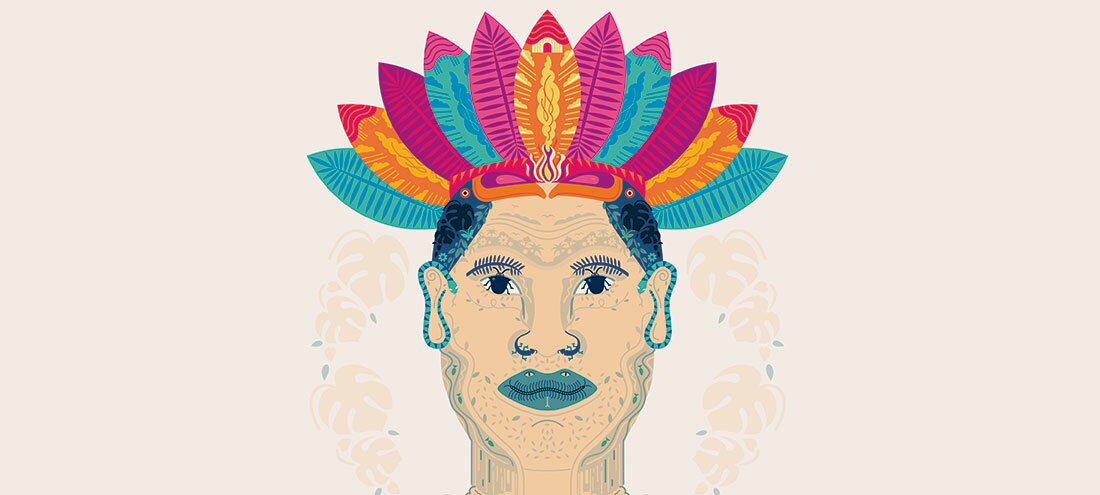
The shaman, Don Juan, is a diminutive, middle-aged man of no more than five foot one. He has a broad, friendly face and is stamping around me, muttering rhythmically under his breath. Every now and again, he swoops at me with a fan of feathers, sending goose pimples up and down my thighs. Despite the hut’s grand title of Alishina Huasi, or House of Visions, it is little more than a conical thatched roof held up by wooden columns, and the racket of the rainforest is deafening. Insects clatter and drone, bright birds whoop and chatter, and off in the tangle of trees, something large howls and jibbers. My eyes are open a crack, even though I’ve been told to keep them closed, and I am acutely aware that there is something small and carnivorous feasting in the fold under my left buttock.
Thanks to a bout of voracious reading on the unexpectedly plush, air-conditioned coach bound for the rainforest lodge, I have all sorts of shamanic trivia buzzing around my anxious mind. I know, for example, that shamanism is not a religion but rather a collection of traditions that have a few basic characteristics in common, practised across the world from Latin American to Siberia. I also know that shamans don’t reply to the situations vacant ads, but instead are called to their vocation by a shamanic ‘illness’. This calamity has the combined symptoms of several severe psychiatric disorders, and only lifts once the reluctant individual agrees to mediate with the spirit world on behalf of their community. I know that fully trained shamans embark on journeys to the Upper Realms of the Spirits, or the Lower Realms of the Demons by clambering up or shinning down the World Tree, and I even know that the Sora shamans of India make these vertical journeys less arduous by transforming their souls into monkeys. I understand that Don Juan’s rhythmic chanting and stamping functions in the same way as drumming does in other traditions, by helping him enter the trance necessary for journeying.
Every time he swoops close, I get a strong whiff of wood smoke and aguardiente, the frighteningly potent, locally brewed firewater made from sugar cane, but I also understand that his fiercely boozy odour isn’t just the outcome of spending a free afternoon on the sauce. He’s been drinking in the name of duty. While dancing and drumming is enough for some shamans (especially, it seems, modern urban ones with websites and an aversion to being imprisoned for possession of class-A drugs), more traditionally minded sorts enlist chemical help to get them into the swing of things. Psychotropics like peyote get a lot of sensational press coverage, but the common-or-garden alcoholic beverage is perhaps the most common shamanic trance-aid of them all. The relationship between alcohol and shamanism is complex, due in part to the kaleidoscopic nature of shamanism itself, but also to the wide and varying territory in which shamans practise their craft. In Ecuador, firewater is the tipple of choice. It not only has a role in cleansing rituals, but also plays a part in the infamous ayahuasca ceremony, Amazonian shamanism’s most notable rite. The so-called Vine of the Dead is brewed up over a number of days with a collection of other forest herbals. While the ayahuasca itself is not a hallucinogen, it stops the body breaking down the DMT in the other accompanying ingredients, which is then free to run riot in the brain for anything up to twelve mind-melting hours.
Shamanism isn’t all about getting happily sozzled and then going for a nice climb up the World Tree
Ayahuasca tastes foul, so a shot of aguardiente not only speeds up absorption into the system, it also blunts its rather singular, metallic taste. Elsewhere in Latin America, chicha is the poison of choice for shamans and lay folk alike. Made from maize or manioc, the fermentation process is kicked off when the raw ingredients are thoroughly chewed up and then spat back into the pot. The enzymes in the chewers’ saliva provide the magic catalyst. In the Pacific you might come across kava, known as maqona in Fiji or ‘wild cognac’ in Papua New Guinea. Rather than containing alcohol, this grey liquid made from a relative of the pepper plant is a mild sedative. It promotes clear thinking and patience, numbs your lips and tongue, and renders long-term users a little on the twitchy side. In the Himalayas, Newari shamans transform the local chaang, a rice beer that occasionally makes it into the headlines for its toxicity, into amrita – the elixir of life – which is the basis of their shakti, or healing power. In Mongolia and Siberia, a hotbed of shamanism, Russian influence is strong and your shaman will most likely be found swigging from the vodka bottle between tokes on their mildly hallucinogenic juniper roll-up. In more traditional areas, airag might also get a look-in. Fizzy and lumpy, it is made by churning highly laxative mare’s milk until the lactose is broken down by fermentation. This is often achieved by tying bags of it to the saddle, and letting the jiggling do all the hard work. The booze not only helps to raise the shaman’s ‘windhorse’ – or psychic power – it is also flicked to the four directions of the compass in order to appease the elements.
Shamanism isn’t all about getting happily sozzled and then going for a nice climb up the World Tree, however. Extremes of abstemiousness are often required before embarking on a ritual. In preparation for our cleansing appointment, it is likely that Don Juan spent a not inconsiderable time avoiding pork, butter, caffeine, sugar, salt, spices and sexual intercourse to maintain his purity. In the run-up to an ayahuasca ceremony, he would even have to abstain from a friendly chat with the neighbours for a week or so.
Scintillating though all this knowledge might be, shivering in the House of Visions, I still have no idea what is about to happen to me. I am covered in anxious gooseflesh, and the insect sucking blood out of my behind, despite my ineffectual swatting, is getting fatter and fatter. Through the slits of my half closed eyes, I watch Don Juan stamp across the packed dirt floor to a tree stump arrayed with feathers, leaves, mysterious wrapped packages and little glass bottles. He picks up a small bowl containing a smouldering bundle of leaves rather like a New Age smudge stick. He blows onto it sending puffs of acrid smoke up into the thatch. His eyes unfocused and bleary, he stamps back in order to bathe me meticulously in the smoke, front and back, left side and right side, wafting it over me with his fan. Thankfully, it persuades the now enormous feasting insect to uncouple itself from my buttock and zigzag bad-temperedly off into the forest in search of less smoky prey. He returns the smudge stick to the stump and exchanges it for a dented plastic bottle of homebrew and takes a mighty swig. Ah, I think, more grist for the shamanic wheel. But instead of swallowing it, he spits it out all over my face through tightly pursed lips, making a noise like a surfacing porpoise. No amount of research could have made me close my eyes in time, and they smart sharply as he spit-cleanses me from the back, and then from either side, coating me in a fine spritz of fruity moonshine. As the firewater dries stickily on my skin, I hear the alarming buzz of interested flies and contemplate making a run for it back to the comparative safety of our bamboo bungalow with its arachnid-infested shower.
With firewater still in hand, Don Juan stoops to fish a burning stick from the fire pit in the centre of the hut

Before any carnivorous insects get the chance to settle, with firewater still in hand, Don Juan stoops to fish a burning stick from the fire pit in the centre of the hut. Chin shiny, he takes another deep swig from the plastic bottle. I squeeze my eyes shut as he brandishes the burning stick in my direction. This time, as he purses his lips and sprays me with the potent liquor, he evidently directs the stream of highly combustible vapour through the flame. The insides of my eyelids flare red as an oily orange plume licks over me. My heart hammers and I struggle to swallow, acutely aware of how a Christmas pudding must feel. In place of searing pain and an aroma of roasted long-pig, however, I feel a pleasant, if rather intense, warmth bathing me from all sides, like a hug from an overly affectionate arsonist.
My heart slows as the heat fades, and the sounds of the jungle creep back in. I realise I have been holding my breath and gasp for air. As I can no longer hear any stamping or muttering, I attempt to open one eye only to discover that my eyelashes have been flambéed shut. I prise them apart and peer around gingerly. Without so much as an hasta luego, Don Juan has gone. I gather my clothes from the floor and tiptoe over to the tree stump to snoop – for research purposes obviously – at the collection of objects huddled there. The half-empty bottle of aguardiente is lying on its side in the dirt. After a moment’s hesitation and a guilty glance over my shoulder, I pick it up and unscrew the cap. It smells like a cross between the drifts of rotting apples that gather in neglected orchards in autumn, and petrol. I am tempted to taste it, but simultaneously notice a thick layer of sediment at the bottom of the bottle, and remember a particularly painful encounter with spiced firewater, or canelazo, the year before in the Ecuadorian highlands and think better of it.
I struggle stickily into my clothes and scamper back to the bungalow through the fading light of the forest. I sniff at the skin of my forearm and gag slightly, but despite my pungent aroma, I feel decidedly upbeat – giggly almost. I contemplate this unexpected light-heartedness and ponder its cause, but whether it is the result of the cleansing, the relief at surviving the barbecuing ordeal, or merely the anticipation of a hot shower, spiders and all, I cannot tell. The feel-good factor endures for a day, and then another. It even lasts the journey back to the coast on a much more authentically rickety bus, and I still feel good that evening when we order our first round of drinks in a beach-front bar. I order an aguardiente in Don Juan’s honour, intending to exclaim, “To shamanism!” as I knock it back. But as the liquid burns its way down to my stomach, the words are lost in an almighty shudder.


Enjoy this article?
This is an excerpt from Hot Rum Cow Issue 5 which is available to buy in our shop. Buy magazine