
Hidden bars – don’t ask, don’t tell
Secrets are made to be broken, and in the world of speakeasies they rely on it. But why the resurgence in an 80-year-old concept established to facilitate illicit drinking? Hot Rum Cow peeks behind the hidden door of the modern-day speakeasy
Imagine a world that isn’t ‘on’ 24/7. The time before smartphones and social media, where conversation was both an art form and the evening’s entertainment. In today’s digitally over-stimulated society, the number of us harking back to a time when technology didn’t creep into every aspect of life is growing, and across the world the bar scene’s response has been a proliferation of modern-day speakeasies.
Despite more than 80 years having passed since the end of Prohibition, many still turn to this era for inspiration – taking their bars underground, serving the sort of cocktails that might have wet Al Capone’s whistle and keeping schtum about where they can be found. Though, of course, not every aspect has been replicated.
“If you look back at the speakeasies of the 1920s, they didn’t have nice cocktails; they had bathtub gin that tasted like methylated spirits. If you were lucky there was some cordial or milk to put in it. They sure didn’t cost $15,” says Boo Paterson, Editor of Boo York City and author of The Greatest Speakeasies in New York City.
“What has transcended the past 80 years is the camaraderie that exists in modern-day speakeasies,” explains Paterson. “You speak to people a lot more easily in speakeasies, all down to the fact that you feel like you are all sharing in the same secret.”

- One of the world’s best bars, Door 74 in Amsterdam
In a world where we no longer need to toil for information, Door 74, a speakeasy in Amsterdam that regularly features in Drinks International’s World’s Best Bar listing, believes that dangling the carrot of exclusivity is one of the reasons why these bars are thriving: “Exclusivity has a lot to do with it; everyone likes to be in the know. If people can bring their friends to a bar like ours rather than one of the big tourist spots, they get kudos for the recommendation,” says Bar Manager, Timo Janse-de Vries.
Door 74 has built a strong following, despite being very well hidden: “We are strict with the number of people we let into the bar,” Janse-de Vries says. “We don’t want to be one of those bars that is packed out every weekend but quiet during the week. When people are able to get a seat and relax, they are more likely to take time to read the menu and order something a bit different, rather than just defaulting to their usual drink.”
Paterson agrees: “Another great thing about speakeasies is that they tend not to overfill their spaces. The really good ones make sure that they aren’t overcrowded and you’re always going to get good service.”
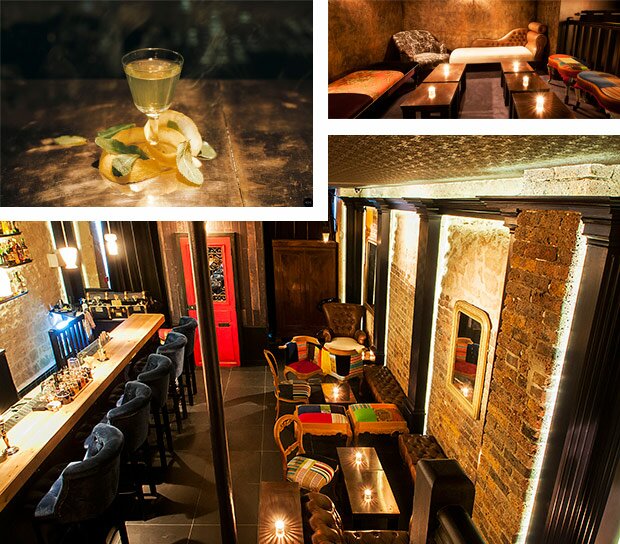
- The Little Red Door in Paris
“The experience drinking in this type of bar is very different to your traditional watering hole,” says Mark Scott, Bar Manager at the Little Red Door and Lulu White in Paris. “It’s the sort of place you can go with your friends and have a chat because the music isn’t so loud you can’t hear yourself think. You will also usually get a very well made drink and good service because these establishments tend to take pride in all areas of hospitality and aren’t just out to make the craziest or strongest drink that they can. It’s about the whole experience, from when you are greeted at the door to being shown to your table. You are made to feel comfortable.”
Having a more serene environment means that speakeasies provide the perfect opportunity to close the gap between customers and the bartender. “What I really like about our style of bar is the opportunity to talk to customers. In speakeasies the drinks are often unique and sometimes homemade, so talking to the customer about what’s on offer is important,” says Scott. “Some might be twists on classics and others might be quite unusual drinks that have been resurrected from old cocktail books and were around in the 1920s and 1930s but haven’t stood the test of time. You need to talk to people and explain what some of the more obscure ingredients are. This opportunity to experiment attracts a lot of people to speakeasies.”
“We live in an age where everything is mass produced, but the sort of cocktails that are served in speakeasies are more personal,” says Janse-de Vries. “We can create something bespoke, which helps to make the experience so much more individual.”
“If you have a confident bartender and one that’s humble enough to not always push their ideas on to guests, there is no reason why you shouldn’t encourage your customers to go off menu and have something bespoke made for them,” says Scott. “Depending on a customer’s mood, the flavours they enjoy or the base spirits, we can make something up for them there and then.”
The aesthetic of speakeasies plays a big part in the overall experience. The candlelight, the decor, the selection of liquors adorning the bar that you’ve never heard of, all seem otherworldly. “Speakeasies are all about transporting people to another place emotionally,” says Janse-de Vries. “It’s a lot easier to do that when a bar doesn’t have any windows, as you can’t get distracted by the world outside. At Door 74 not only are there no windows but people have to ring a doorbell to get in. Subconsciously guests feel more at ease, as they know that not just anyone can walk in.”
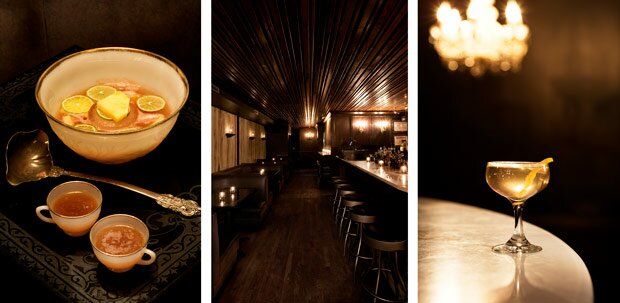
- Death & Co, one of New York’s most authentic speakeasies
“We live in an age where everything is mass produced, but the sort of cocktails that are served in speakeasies are more personal”
Getting the word about these bars out there depends on that ever-reliable marketing tool: word of mouth. “It works exactly the same way for speakeasies nowadays as it did in the 1920s,” Paterson says. “People find a cool place and they tell their friends about it.”
“Guests say to me, ‘Doesn’t everybody know you are here by now?’ And if I look at my guests from last night, 50–60 per cent of them were there for the first time,” says Janse-de Vries. “One of them was born and raised in Amsterdam and had never heard of us. We still get that regularly.”
Scott has found building up relationships with neighbouring bars has proved successful: “We have a great relationship with other bars in the area, who are happy to recommend us to their customers,” he explains. “We also collaborate with other bars and do guest shifts, which helps us to get the word out there.”
Paterson believes a lot of speakeasies both retain and attract people through regularly mixing up their offering: “Places like 2nd Floor on Clinton in New York are good at innovating. They aren’t just a bar, they do a range of things to make it a profitable business, from Prohibition nights to live music and cocktail-making classes, they not only keep it interesting for their regulars, but it helps to attract new customers.”
Both Janse-de Vries and Scott are in agreement that the number of speakeasy-style bars will grow, but they will be increasingly owned by bartenders and bar managers: “New bars are being opened every day by professionals in the industry, rather than investors looking to make a quick buck,” says Scott. “This is really exciting because you tend to get a lot more experimentation, which produces some really great drinks. It’s so much better than a cash-rich group opening lots of bars across the city.”
“Bars that are owned by people within the industry are willing to put in a lot more effort to build a concept and do something special. It’s great to see,” Janse-de Vries says.
It’s all well and good having a brilliant bar, making world-class cocktails and delivering excellent service but is choosing to be hidden really conducive to creating a profitable business? If you’re in it for the long term, Janse-de Vries thinks it can be: “If you are playing the long game, it can make for a really profitable business. This kind of bar won’t work if all you want to do is get in, cash in and then get out. It just won’t work.
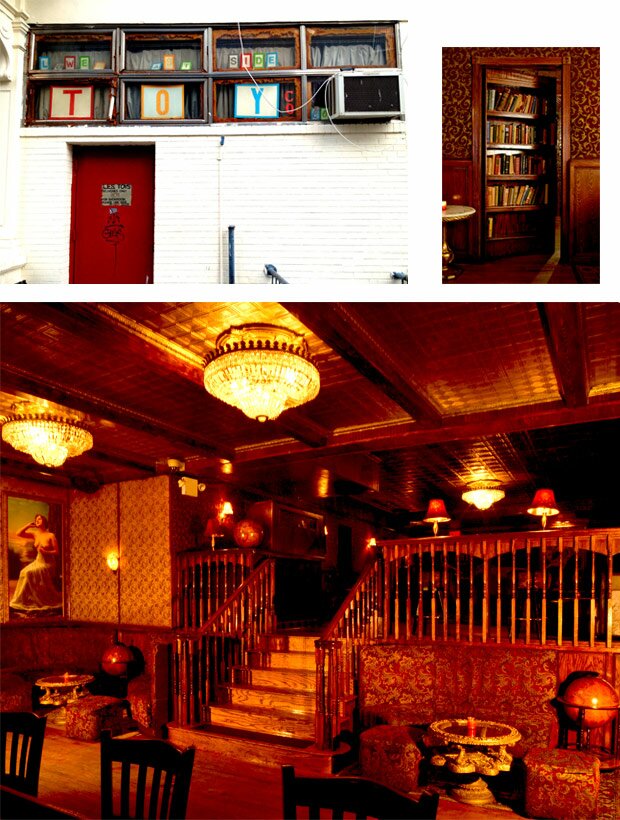
- The Back Room has been in operation since Prohibition
“I think I speak for all serious speakeasies when I say that by starting this kind of bar, you are committing to building something that you hope will last for many years. It would be foolish to think that you could open and the masses will flock to you.
“By the nature of this sort of bar it’s going to take people time to even find out you are there. And that’s really not how it works in Amsterdam. So many bars open, pitch themselves at the ‘it crowd’ for the first three months and then they close down within the year, because those people don’t remain regulars, they just move on to the next new place. That is what you call a bad business model and something you want to avoid. Speakeasies are built on regulars. You want the sort of people that will come back time and time again, not those that will move on as soon as the next new thing opens up.”
“A speakeasy that doesn’t have any focus or focuses on the wrong things tends to forgo the most important aspect of it all, which is making it a good experience for your customers”
And he believes the backbone of the operation has to be both the quality of service and the products: “You need to have focus. A speakeasy that doesn’t have focus or focuses on the wrong things tends to forgo the most important aspect of it all, which is making it a good experience for your customers and making them high-quality, unforgettable drinks.”
It’s reassuring to hear that in an age so driven by technology and social media, there are people who are bucking the trend and running a profitable business without adopting more modern methods. If anything, it goes to show that 80 years on, word of mouth remains arguably the most valuable marketing tool. Long live the allure of not keeping secrets.
Links
Door 74 • The Little Red Door • Death & Co • The Back Room • Boo York City

Enjoy this article?
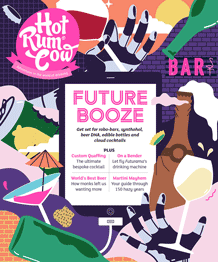
This is an excerpt from Hot Rum Cow Issue 6 which is available to buy in our shop. Buy magazine