His grandmother turned him to drink
Intrigued by his family history, Dan Edelstyn set off to the Ukraine in search of his great-grandfather’s vodka distillery. We explore an extraordinary tale of booze, Bolsheviks and the passing of time
Be careful what you look for in your attic. The last time Dan Edelstyn climbed the loft ladder, he found something that drove him to drink, inspired an attraction to Ukrainian fur hats and created a documentary that will be given its TV premiere on Film4 this autumn.
“Finding that suitcase was a defining moment in my life,” he says. “It was amazing, full of treasures. There were wonderful photos of my Granny – and then there was the manuscript.”
Edelstyn grew up in Belfast but was always intrigued by the Jewish-Ukrainian roots of his father. It was something that his father, who had embraced his Irish identity, showed no interest in. And Edelstyn had little opportunity to pester him – he was just three when his father passed away.
“I asked my Mum if there was anything remaining,” says Edelstyn. ”I’d heard that Granny had had quite an exotic life but I’d never even seen a picture of her. Mum told me there was a suitcase in the attic.”
Edelstyn’s grandmother was Maroussia Zorokovich. Her memoirs from the attic recounted a privileged life in pre-Bolshevik Ukraine, followed by her experiences of the 1917 Russian Revolution, when she joined a dance troupe to boost the morale of the beleaguered White Army. Together with her husband, she then fled to Britain for safety.
Edelstyn decided that being a film-maker wasn’t enough for him; he was going to become a vodka baron too
It’s evocative stuff, with liberal flourishes of poetic licence. It’s also light on details – for instance, the name and location of Maroussia’s village, where much of the action takes place, is not specified. However, the documents contained enough clues to make Edelstyn determined to find out more.
Together with his film-maker wife Hilary, he decided to set off to the Ukraine and make a documentary about his grandmother’s memoirs. It was then that the project took a sharp left turn. Edelstyn discovered that Maroussia’s father had owned a vodka distillery. After much painstaking research, they tracked this down to a village called Douboviazovka – this was the family home. When Edelstyn visited, he was astonished to discover that the distillery was still there. It was in state control but locals confirmed that, prior to the Bolshevik Revolution, it had been owned by Edelstyn’s great-grandfather, Ilya Zorokovich.
Edelstyn decided that being a film-maker wasn’t enough for him; he was going to become a vodka baron too. Despite having no experience of the drinks industry, he entered negotiations with the distillery to create Zorokovich 1917, a premium vodka based on his grandfather’s original recipe. It’s this extraordinary tale that unfolds in his film, How To Re-Establish A Vodka Empire.
The film is a triumph of spirit over adversity – and so is the vodka itself. In one of the key scenes, Edelstyn excitedly returns home with his first batch of Zorokovich and asks UK spirits writer Ian Wisniewski for his feedback. It doesn’t go well. Wisniewski politely explains that the vodka lacks body and is unlikely to fare well against its premium-price competitors.
-
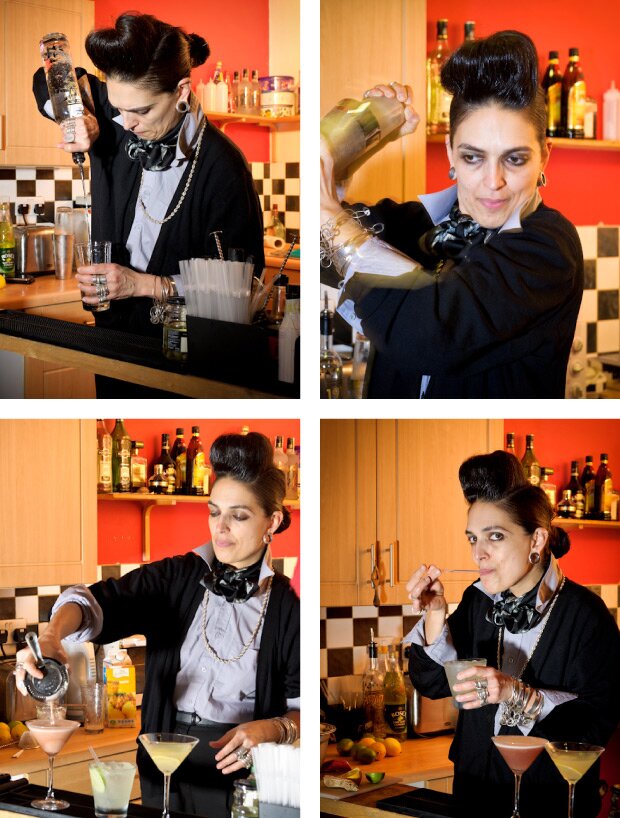
- Pour, shake, stir, taste: four steps to Zorokovich heaven
It’s a humbling moment. “I don’t think that stuff was properly blended,” says Edelstyn. “But it was really disappointing because I thought we were away and it would be simple.”
Work continues on creating a vodka that lives up to the promise of the Zorokovich story, and Wisniewski is eventually won over, enthusiastically describing the flavour on the palate as “lightly creamy aniseed and underlying grain notes coming to the surface, garnished with a hint of mellow spice”.
“I knew nothing about vodka before this experience,” says Edelstyn. “At the time, it all felt a bit ‘Emperor’s new clothes’ to me. That’s why I hired people who knew what they were doing to taste it for me. But then I wasn’t sure if they did really know what they were doing or were just pretending. So that led to a kind of paranoia. Then you realise that some people do genuinely know what they’re talking about.
You also realise that there’s never going to be the ultimate vodka, just lots of different kinds of vodka, like lots of different kinds of everything. But our vodka had to be good. As one distributor told us: ‘The liquid has to be the hero’. And we’ve achieved that. It was hard work but it’s great vodka. I like it neat, at room temperature.”
Edelstyn’s first trip to Douboviazovka was thrilling. He received a friendly reception – and even met an elderly lady who remembered his grandmother. It fired him with plans to create a social enterprise, ploughing back some of his potential profits to the village and becoming involved in the community.
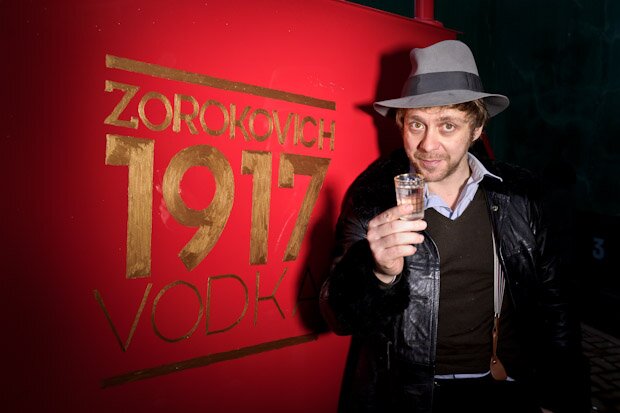
His second visit was a big disappointment. The people were cold and intimidating, strangers shouted abuse. Advice was sought and it seemed that his scruffy dress, dirty car and ushanka (fur hat) were not creating the best impression. Locals expect their entrepreneurs to look smart – and only to don their ushankas in the bitter cold. In the film, Edelstyn is hurriedly seen sprucing up his appearance – but how is he getting on with them now?
“I’ve got friends there, but my initial romantic ideas about the village were a lot to live up to. However, if we ever make any profit, I’m still very keen to plough a percentage back into the village.”
How difficult is it to do business in the Ukraine? It’s not a question that Edelstyn is keen to be drawn into, other than admitting that it’s a challenging environment for an “idealistic foreign film-maker-cum-entrepreneur”.
Zorokovich is a 100% Ukrainian brand made from local winter wheat and spring water, but its creator is a London-based, Gordanstoun-educated Irishman with British and Jewish-Ukrainian forebears. Much of the film is inevitably intertwined with a questioning of his identity.
“I felt a bit dispossessed in my early twenties – I was always trying to find myself,” says Edelstyn.
“I went through a phase of feeling an affinity towards Jewish communities after reading Granny’s manuscript but the reality is that I’m not properly Jewish. When I was seeking funding for the film, I was cross-examined by various Jewish charities asking: ‘How Jewish are you?’ They always concluded that I wasn’t Jewish enough for them to give me any money. I ended up not giving a monkey’s about what I am.”
-
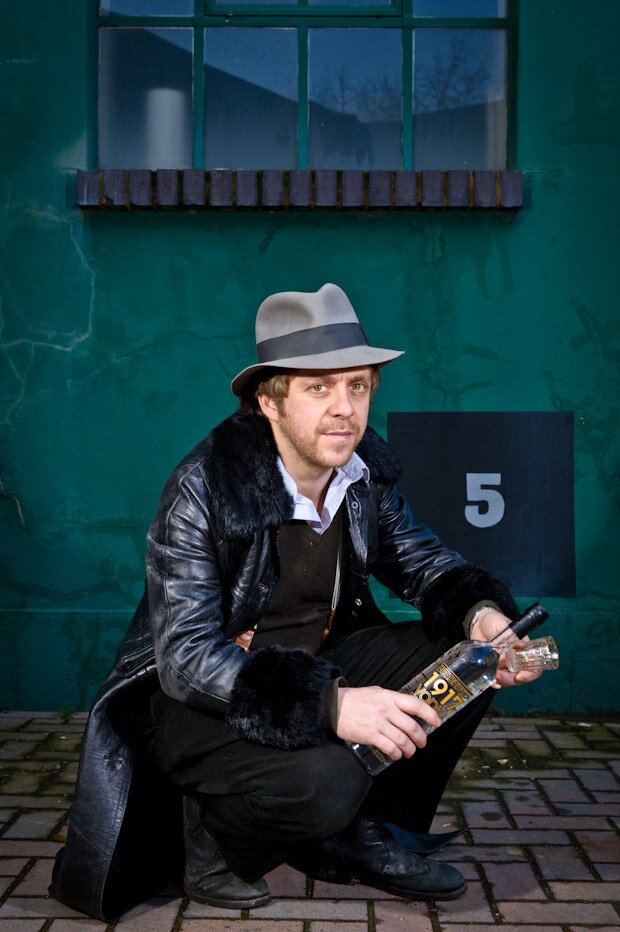
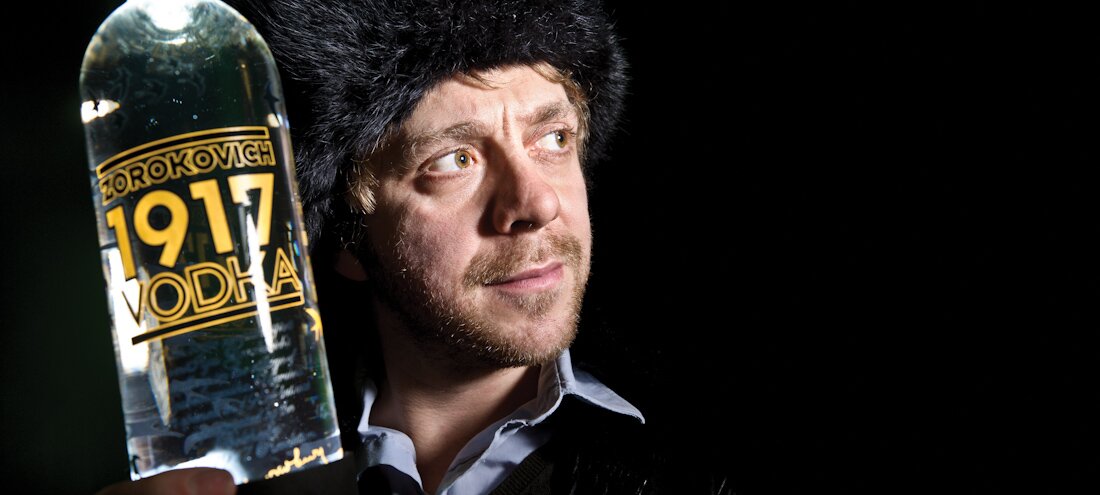
- Dan Edelstyn and Zorokovich 1917, outside his north London base
When you meet Edelstyn at his comically chaotic and semi-dilapidated HQ in north London, you also wonder what on earth he’s going to focus on next. Dashing around, dressed like a small-time Ukrainian gangster, it’s almost impossible to get him to sit down. Charming and funny, his mind races from photography to music to design. His office is a car crash of vodka bottles (unopened), fancy dress props and paperwork. A pizza is burning in an ancient, tiny oven in the corner. A wonderfully vivacious Greek friend is erecting a pop-up bar to make us vodka cocktails. And three friends have arrived to join the circus.
Edelstyn is a polymath. As well as a film-maker, he is also a musician. “I had a band called The Orchestra of Cardboard,” he says. “The band members were literally cardboard cut-outs. I would write the songs, make the music with a producer and then appear on stage next to my cardboard orchestra friends. More recently, I collaborated with a composer on the music for the film, and we managed to get the Prague Philharmonic Orchestra to record it – we got a budget from Universal.”
He also has plans to release a record this Christmas. But for now, Edelstyn cheerfully admits that he spends much of his time carrying bottles of Zorokovich in a briefcase trying to find stockists. He hasn’t made a bad start. One of the first retailers to snap the vodka up – and one of the few stores you can currently buy a bottle from – is Selfridges in London. He has also persuaded several à la mode bars in the English capital to take Zorokovich on (see www.myvodkaempire.com for stockist details).
It’s about time, it’s about family life, and it’s about the importance of seizing the day
“I’m still enjoying the journey with the vodka,” says Edelstyn. “But I really want to make more films and music as well. I’m just someone who loves to do lots of different things, and it’s a bit of a curse in many ways. If you focus on one thing, it’s easier to see the progress you’re making, but I’ve got one little life and I may as well spend it doing what I enjoy doing. Because my Dad died when I was three, I have always been aware that time passes so quickly, so I don’t like to waste it.”
The poignancy of his father’s death is heightened by the birth of his daughter, Esme – an event featured in the film. There is also some interesting ‘trangenerational’ acting. Edelstyn plays the part of his grandfather, Hilary plays his grandmother and Esme makes a cameo as Edelstyn’s father.
“When you watch the film you’ll notice that it starts off being about my Granny, then about the vodka. And afterwards I realised that it’s not really about any of those things. It’s about time, it’s about family life, and it’s about the importance of seizing the day.

Enjoy this article?
This is an excerpt from Hot Rum Cow Issue 1 which is available to buy in our shop. Buy magazine