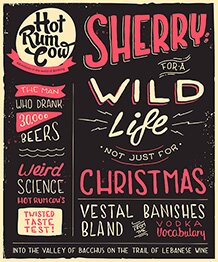

To aspire to be bland is a rare and surprising thing. While many may lament the lack of variety in popular culture, no one involved would ever admit to striving to achieve dullness. In the drinks world, however, vodka positively revels in it. Promotional websites for the leading lights in the vodka trade are awash with synonyms for dreariness like ‘pure’ or ‘clear’. Brands constantly seek to out-do each other over how many times they distil, or through what unique and extravagant material they relentlessly filter every drop of spirit. Not long ago the world’s best-selling vodka dined out on the fact that it beat several super-premium rivals in a blind public taste-off because of its ‘purity’.
It wasn’t always that way. “Once upon a time, in Poland and Russia, vodka was made much as wine is made in Western Europe – with lots of small producers.” John Borrell gazes out over a small patch of potato plants, his softly spoken voice flecked with hints of his Kiwi heritage. “Individual villages would make vodka with distinct flavour and character. But things changed when the manufacturing became regulated.” As the sunlight struggles bravely to burst through sullen summer clouds and bathe the deep-green foliage at our feet, Borrell charts the rise of the Russian revenue machine which pushed vodka manufacture inexorably towards the massive industrial process that it is today.
Large-scale production by state-owned distilleries would churn out cheaply made intoxicants, which would, in return, bloat the Imperial coffers. “Half the wars that the Tsars fought were probably funded by vodka taxes – it was one of the biggest tax revenues for the Russian state.” This continued into the Communist era throughout Russia and Poland and was so widespread that, once the Iron Curtain finally fell and the free market beckoned, this colourless, flavourless spirit was all people knew vodka to be.
“Vodka nowadays is nothing like the Slavic vodkas being made hundreds of years ago,” says Borrell. In fact, production practices have changed and scaled up so fundamentally that no one really knows how those centuries-old spirits would have tasted – and for Borrell, making this is as much an experiment as it is a business venture.

“I was a war correspondent for Time magazine and I was tired of it. I spent 26 years on the road and covered basically all the wars since the sixties” – John Borrell
Vestal as a product is barely four years old and each vintage has been made with only limited awareness of how the final spirit will taste. The process differs very little from other distilling methods – the potatoes are harvested at the height of summer each year after a relatively short period of growth. They are washed, heated and broken up to release their starch before a particular yeast strain is added which breaks the starches down and ferments the resulting sugars. The potato ‘beer’ is then put into a single column still and distilled to a ‘spiritus’ of around 94% ABV.
After coming off the still the spirit is kept in an open vat for a short time to allow the least desirable, most volatile constituents to evaporate before being transferred for bottling. A typical run of a thousand litres of distillate will produce little more than four-and-a-half thousand bottles once cut down to 40% ABV. As each vintage is prepared, a meticulous log is made of every harvest date, each day of weather during growth and every stage in manufacture in an attempt to discover what will influence the flavour of future vintages.
Borrell is a relative newcomer to the world of vodka-making. “I was a war correspondent for Time magazine and I was tired of it. I spent 26 years on the road and covered basically all the wars since the sixties. I was covering the war in Yugoslavia and I just thought, ‘Well I’ve been in so many conflicts that I ought to do something else with my life.’ I realised with the collapse of Communism that there was a possibility of doing things you could never have done in Eastern Europe before.”
He and his wife set up a small boutique hotel nestled in the rolling farmland of the Kashubian District in northern Poland. Then, in the mid-nineties, he opened a wine importers. “In 1994 you could buy expensive wine and cheap wine in Poland but not interesting wine.” The company became a success and this thirst for all things ‘interesting’ drove him to his latest venture – attempting to recreate a long-forgotten drink.
“It’s all about the terroir,” he says, as he carefully lines up a fresh label on an otherwise naked bottle of the 2011 expression, only emphasising the cottage-industry feel that Vestal has. The French have understood terroir for centuries and indeed coined the term to encapsulate how even subtle changes in soil type, topography, temperature and weather can all affect the flavour of the finished product. “The potatoes grown in one plot will be different to the ones in another. The soil may hold less water or the sun will hit the plants differently. We don’t harvest at the same time every year because the potatoes won’t be ready at the same time.”
An impromptu tasting is arranged and, as the aromas gently waft from the rim of the bulbous brandy glasses, it is clear there is much more to Vestal than other vodkas. Nuts, citrus, orange blossom, black pepper, capsicum, pears, green apples and even the faintest whiff of smoke are all present. Most of these flavours can be detected by a trained nose when tasting the more familiar vodka brands but where those are muted and insipid – fighting to be felt past the punch of pure ethanol, these are vibrant. Full contrast. High-definition.

“It’s all about the terroir. The potatoes grown in one plot will be different to the ones in another”
The mouth-feel is gently creamy and leaves the palate with the same delicate, starchy patina left by a spoonful of buttery mash. Borrell assures us that the sister spirit from Podlachia is equally flavoursome yet with a much more peachy and fruity character, and experiments with a new variety for the 2013 vintage will only add to the rich spectrum of styles being produced. There is a marked improvement between the 2009 and the 2010, which Borrell puts down to the decision to harvest younger potatoes for the latter. “If they are left to grow too long and there is too much water in the potatoes it compromises the flavour. Or so we think – we have no historic or scientific proof of this.
It’s very much trial and error since we have no benchmark.” Which begs the question – how will he know when he hits the magical chord of a perfect vintage if no one has been playing this kind of music for centuries? “It’s purely a matter of taste. In the fullness of time – or some other clichéd phrase – with trying a couple of extra potato varieties each year, eventually we will find out if there is a taste that makes everyone say, ‘Wow’. But it will take time.”

There are just a few simple principles at the core of the Vestal philosophy – and these will sound familiar to anyone with a passion for food. Regionally sourced ingredients, traditional cultivation methods and, crucially, the know-how of experienced, local farmers. The chestnut-brown workhorse who plods among the potato plants, together with the bristle-lipped bumpkin and the squeaky soil tiller being dragged behind are not just trotted out for today’s photo opportunity. Borrell has selected these farmers specifically for their seasoned skill and aversion to modern equipment in a bid to maintain an authenticity and provenance for the Vestal brand. As Borrell’s son, William, explains, the shift in consumer opinion towards the foodies’ fascination for all things ‘artisanal’ has spilled over to the drinks industry where he has seen interests piqued at the big bar shows by quirky craft gins and other small-batch spirits.
It seems (amongst the professionals behind the stick, at least) that people are no longer seduced by the slick, superstar-endorsed marketing campaigns that vodka has been at the vanguard of for many years. With a flourishing cocktail culture taking its ‘ingredients are all-important’ cue from the culinary world, bartenders are becoming far more discerning about what they choose to serve – and William is all too aware of this. “It’s true to say that any brand is built up on the on-trade. Bar people who understand the production process and are curious as to what they’re using really help with the brand advocacy because they are at the front line.” While the UK may be a little wary, Vestal is finding loving homes everywhere from Poland’s only Michelin Star restaurant to markets in France and the US.
It seems the industry is cottoning on too with big vodka brands announcing new bottlings that allude to more craft-like production methods. Will this new direction force a change in what the regulators define as ‘Vodka’? “We’d like to think it might,” says William, “but we’re not looking to be mass-market. We have a niche, we’re happy to fill it and we will continue to produce the best spirit we can.” One thing can be certain – blandness won’t get a look in.
When is a vodka not a vodka?
The EU has such strict guidelines on the maximum ‘residues’ allowed in vodka that it’s incredibly difficult to produce a spirit with any personality – though paradoxically the guidelines for production are so lax that vodka is virtually indistinguishable from ‘agricultural spirit’. Whereas other liquors have many criteria that they must fulfil in order to be recognised as ‘cognac’ or ‘whisky’, for example, they are nevertheless allowed significantly more leniency compared with vodka when it comes to things such as esters, aldehydes and methanol – in other words, the constituents that impart character. Under current restrictions Vestal must label itself as a ‘potato spirit’ since it exceeds the current residue levels for vodka – despite being well within the boundaries laid out for other spirits.