
Why whisky lovers must drink more sherry
The coopers of Jerez are working flat out to sustain the centuries-old relationship between sherry and whisky
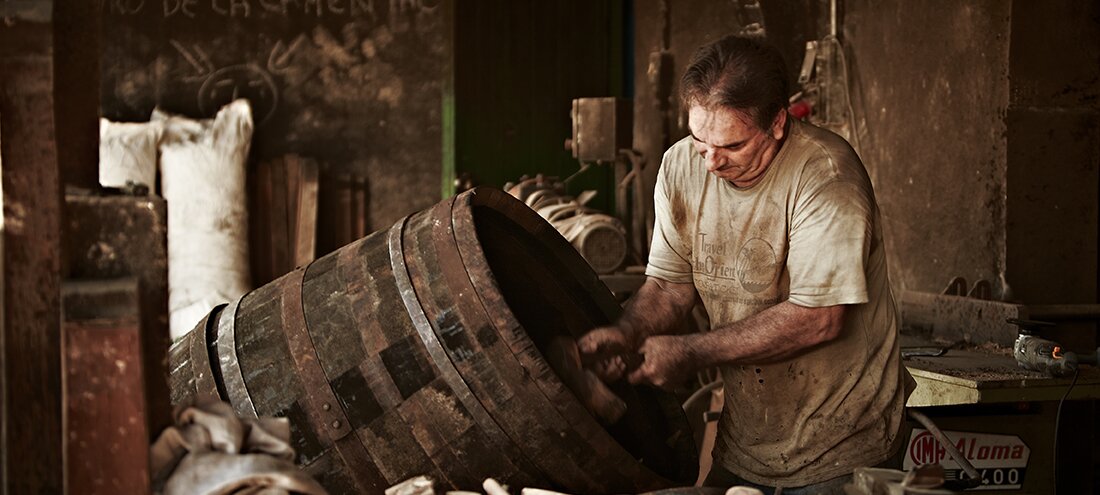
It’s mid-morning at Tonelería Julio. This being Jerez in the south of Spain, the temperature is easily in the 80s and none of the other circumstances seem conducive to graft or craft. It is a cramped and grimy compound and the equipment looks old and over-worked. However, both graft and craft are here in abundance as the coopers break down, repair and rebuild sherry-soaked casks, nearly all destined for whisky distilleries.
Julio’s team is maintaining a relationship between sherry and whisky that stretches back hundreds of years, a relationship which started almost by accident. Barrels, for a time, were simply the most effective vessel for storing and transporting goods from butter to nails to fish. In the early 1800s, illicitly distilled whisky would be stored in whatever kind of barrel came to hand. Sherry’s surging popularity in Britain from Elizabethan times meant that by the late 1800s, 60,000 sherry butts a year were being imported, according to World Whisky Day founder, Blair Bowman, who researched the relationship between whisky and sherry while studying at the University of Aberdeen.
“Sooner or later people started to realise that the whisky would start to mellow when left for a while in a barrel that had previously stored sherry or other sweet wines,” says Bowman. “In 1864, William Sanderson, who created VAT 69 whisky, wrote that, ‘it is well-known that whisky stored in sherry casks soon acquires a mellow softness which it does not get when put into new casks’. I thought it was going to be much more romantic, but basically it was an accident that sherry butts mature and colour whisky so well.”
Maturation in sherry casks was the norm in Scotland and Ireland in the 19th and early 20th centuries, but after the Second World War, most distillers started using US casks, which were abundant because of the rules governing bourbon production.

Today, the problem for the industry is that, having developed a taste for what sherry barrels can do for whisky, it is hard to source enough high-quality, aged sherry barrels. The Fine Cask Company specialises in sourcing such casks for the drinks industry. Co-founder (in 2011), Claudius Elsenberger says the worldwide whisky boom, the comparative stagnancy in the sherry market and the nature of the solera system mean old sherry casks are scarce. The solution for many of the larger whisky makers seeking a consistent supply of casks is to have them made new from American or European oak and seasoned with sherry for up to three years.
Elsenberger says: “You don’t get thousands of high-quality, old, used casks because they are still selling the sherries at bodegas and they only get rid of so much. Because of this and because they can guarantee the quality, the main whisky brands mature in seasoned new sherry casks.”
The Fine Cask Company sources casks ranging from 15 to 35 years old, though occasionally sells 40-or 50-year-old casks. Supply currently limits them to between 1,500 and 2,000 casks per year. Around 75 per cent go to whisky distilleries with the rest being used to age rum, beer and even chocolate on one occasion.
“It is a tricky thing to get the good- quality casks which can give that real depth of sherry influence. Our advantage is having people there in Jerez like our oenologist José María Quirós. We will work with any bodega and our guarantee is José María. He is highly respected. Even when the big bodegas have problems with their solera they call him, because he’s the guy, he smells it, he knows it. The experience he has is amazing and we do quality checks throughout the whole process to make sure of provenance and freshness.”
When the casks have been sourced, Julio’s team will generally re-size them to 500 litres for the whisky market. They must act as quickly as possible to prevent them drying out but also take great care with casks which have been slumbering untouched in bodegas for decades and are often held together with little more than sediment. The re-sized, repaired casks will be strong enough to be filled up to three times with whisky and are given eight to 12 litres of good-quality sherry for the journey.

Aged casks are used mostly for finishing whisky as they impart such a concentrated sherry flavour, says Elsenberger. “They are perfect for this because the finishing goes quicker than with normal casks. But, some of our customers might use it for younger whisky. Slyrs in Germany did an Oloroso and a Pedro Ximénez finish using whisky that was only three-and-a-half to four years old which was finished in between eight and 14 months, and they were brilliant. People love the Ximénez finishes – it gives the whisky a much sweeter flavour and darker colour – but the casks are even harder to source.”
Slyrs, based in Bavaria, started out making fruit brandy in 1928 but branched into whisky in the 1990s with such success that they had to build a second distillery for it. Though it is the biggest whisky maker in Germany, for now, Slyrs can still source sufficient old sherry casks for demand. Master Distiller Hans Kemenater says: “I love the fruitiness from the PX, the sweetness, the dried plums. And with Oloroso casks, the dryness and nuts.”
They are now even experimenting with maturing in Marsala, Port and Sauternes casks to be released, if successful, in the next year or two. Slyrs’ demand for casks is expected to rise from 30 to 60 next year, so it may not be long before they too must consider the merits of seasoned casks. But these merits are not just practical, says Tomatin Director, Stephen Bremner. Tomatin uses around 200 casks a year, with seasoned casks making up around half. Bremner says both types have an important role. “We use the older casks when we’re looking to get deeper notes. From Oloroso you get deeper flavours of toffee and caramel, sometimes some herbaceous notes. From seasoned casks you pick up some sherry notes but also a lot of wood-derived notes.
“With seasoned casks you get continuity of supply and a bit more control in terms of the contracts makers have with the coopers. Some of ours are filled with new-make spirit and some used to finish to get some wood notes, like vanilla and coconut, and sherry notes. It’s just getting the right flavour profile for the whisky.
“There is definitely an increased market for sherry finishes like our 18-year-old. Single malt drinkers are more knowledgeable than ever and want as natural a product as possible. If you’re using the old casks, you’re getting that authentic sherry flavour and that’s what consumers want.”
To sate this demand and secure the bond between sherry and whisky we offer a palatable solution – whisky lovers must simply drink more sherry.