

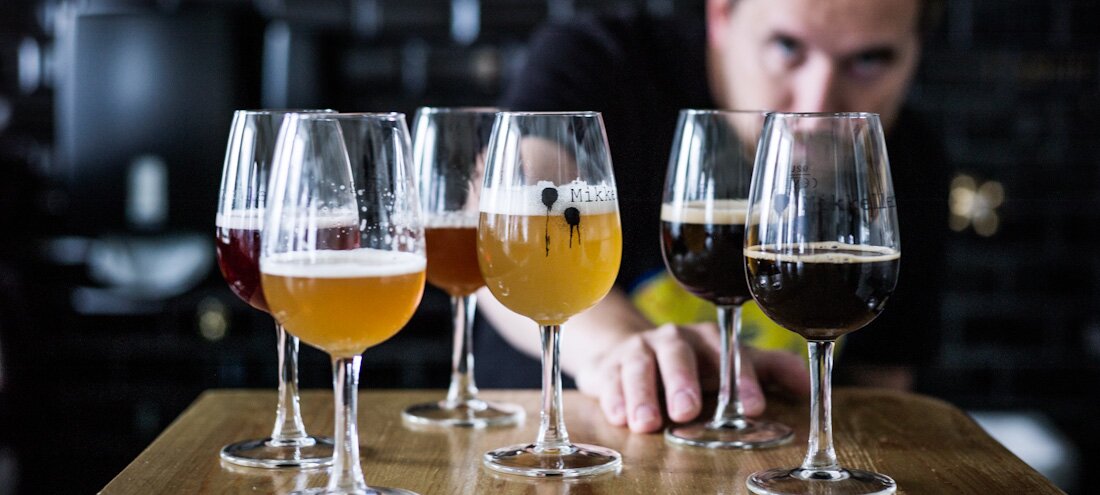
Drinking from the Mikkeller Cellar
Hot Rum Cow heads to Copenhagen to meet the godfather of gypsy brewing
If you’ve ever felt bored and disillusioned at work, perhaps toyed with the idea of jacking it all in and starting afresh with something completely different, then Mikkel Borg Bjergsø might just be your new hero.
Ten years ago he was a maths and science teacher, experimenting with beer-making kits in his kitchen to save a few kroner. Today he is an internationally renowned brewer of cult status and owner of a bar officially voted Copenhagen’s best, and which attracts beer fanatics from across the world.
It’s a great story, but the best part is that Bjergsø has achieved all of this without even owning a brewery. Because back in 2006, he and his childhood friend Kristian Keller had an idea as simple as it was genius – to brew and sell their own beer, using other people’s stuff. In doing so, they founded the Mikkeller brewery and invented ‘gypsy brewing’, sparking a quiet revolution in the brewing world.
If Bjergsø is living the dream of a million bored employees worldwide, you wouldn’t know it to meet him. He is quiet and serious, and not obviously excited about being a cultural icon. Actually, he says, he sometimes misses teaching. He certainly didn’t intend to kick-start a phenomenon that has spread like wildfire across Denmark and beyond. He just wanted to make more of the beer he had perfected in his kitchen.
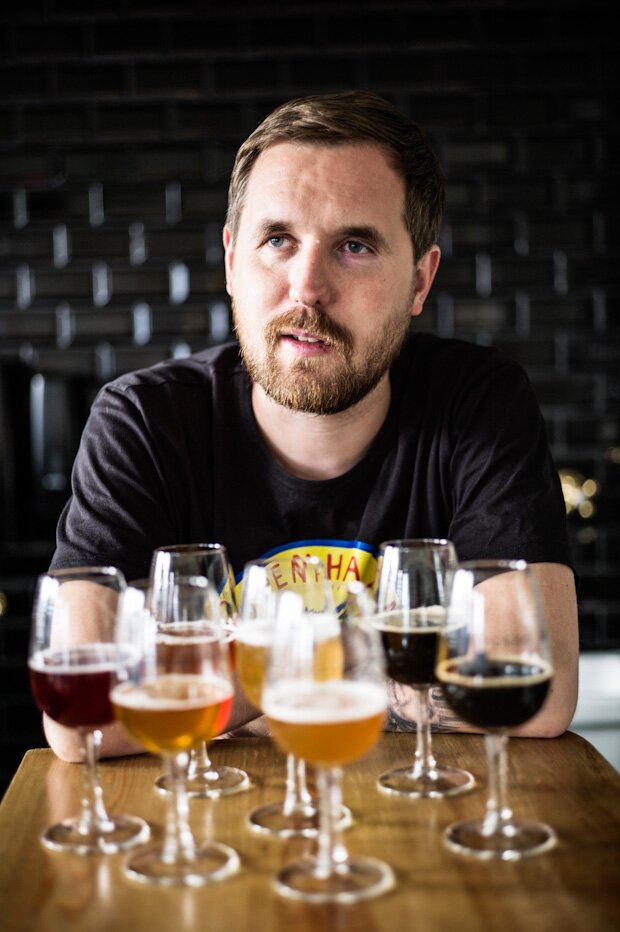
- Typsy Gypsy: Mikkel Borg Bjergsø
“I think it’s really similar to a good chef. I mean, he doesn’t do a test before. You know the ingredients, you know if you use this ingredient at this point of the brewing what comes out”
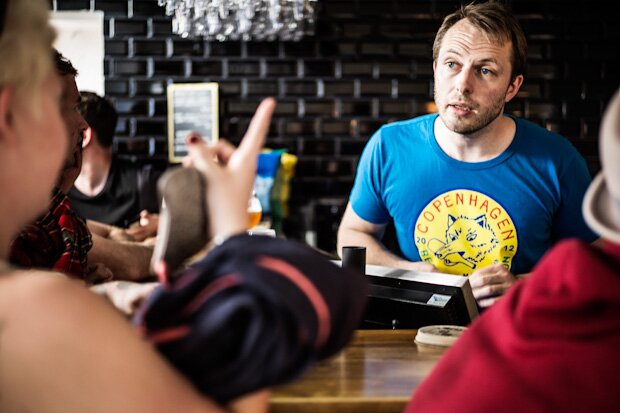
- Brisk business: Orders in at the Mikkeller bar in Copenhagen’s Vesterbro district
“We got so many new breweries [in Denmark in the late 1990s], and what happened was everybody built a brewery, took big bank loans, and then brewed the same beers – because if you have a big loan you have to sell a lot of beers, and then you can’t experiment too much. We didn’t want to do that. We just wanted to do the same as we were doing in the kitchen. So if we could rent time at a brewery it wouldn’t be a big risk, we could just take a small bank loan to pay for that beer.”
And so it began, with a modest batch of 3,000 bottles in Denmark’s Ørbæk brewery. Mikkel’s twin brother Jeppe-Jarnit stocked the beer in the small shop he opened in 2005 and it quickly sold out. They did another batch. That also sold out. From there, Bjergsø says, “it really quickly grew. It grew like crazy.” They started brewing in other breweries. Keller bowed out of the enterprise in 2007 to concentrate on a career in journalism, but Bjergsø continued, flitting from brewery to brewery, trying out different beers, different styles.
Today, he travels all over the world to brew, from Australia, to Russia, Europe and the US. Brazil, Shanghai and Hong Kong are the next stops pencilled in for the coming weeks and months. With each visit Bjergsø collaborates with the host brewery, often producing a new beer style. In Shanghai he’s keen to use ingredients from Chinese cuisine. Sometimes he just introduces the locals to a nice IPA.
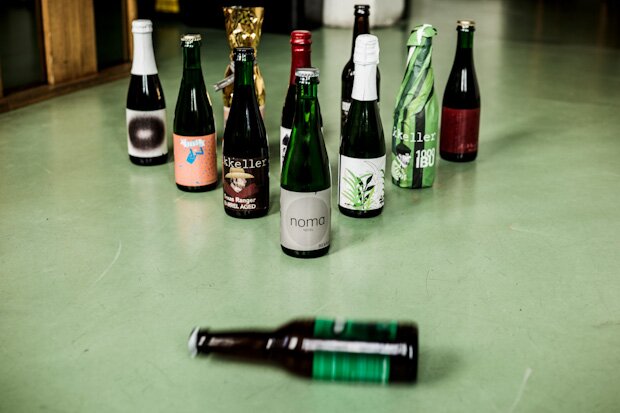
“So many beer labels are ugly as hell, which I don’t understand. If you make something, why not the whole package?”
Piggybacking on the resources of existing breweries makes the impossible possible for small-time brewers, a kind of magic bridge between home and commercial brewing, but the advantages are more than just financial. “Some critics think that we did it because we didn’t want to invest a lot of money. And in the beginning, yes. But that’s not the point any more,” Bjergsø says. “For me, it gives a lot of freedom. I can actually choose to brew at the best breweries in the world.
If I want to do a certain style of beer and I know that they’re good at that in Norway, for example, we can go there and brew a beer.” It also gives Mikkeller a nimbleness that conventional breweries can’t match – last year it brewed an astonishing 94 new beers.
The label ‘gypsy brewer’ (coined by the press, not by Mikkeller) can be a bit misleading, giving the impression that Bjergsø rarely brews in the same brewery twice. In fact, the vast majority of Mikkeller’s beers are brewed in a small number of core breweries.
Ninety per cent are brewed in Belgium, with regular brews also carried out in Scotland (at Brewdog), Norway and Denmark, and with the first forages being made into regular US brews. And because Mikkeller brews in different locations around 12 times a day, Bjergsø himself often isn’t even present. But that doesn’t bother him, thanks to a surprising lack of interest in the practical details of brewing. “I don’t enjoy being in a brewery all day, looking at tanks,” he says. “I’m not that kind of brewer.”
Instead, what he enjoys is making recipes. “Most of the new beers we do now, pretty much all of them, we don’t do an experiment on a small scale. I just make up a recipe and then we brew the beer. And people ask me, ‘How can you do that?’ But in that way, I think it’s really similar to a good chef. I mean, he doesn’t do a test before. You know the ingredients, you know if you use this ingredient at this point of the brewing what comes out.”
Knowing ingredients is something on which Bjergsø seems to pride himself. Whenever he talks about his beer, he returns again and again to the theme of home brewing and to his ‘experiments’ with Keller in the kitchen, as if everything he does now is basically an extension of that same project. Some of his beers may seem self-consciously weird – they include one made with those Vietnamese weasel coffee beans, whose flavour is ‘enriched’ as they pass through the weasel’s bowels – but, he insists, there’s a method in the madness. And it’s all about dissecting flavour.
A good example is the Mikkeller ‘single hop’ series – 20 beers, all exactly the same except for the choice of hop. The aim was to demonstrate the importance of choice of hops on flavour – a fitting educational exercise for an ex-teacher. “Doing that as a home brewer taught me a lot. So why not do the same for consumers?” Some people like to try all 20. Home brewers in particular, Bjergsø says, often drink the whole series to inform their own brewing. Taking the project to an extreme, the brewery also produces ‘IBU 1,000’, taking its name from the International Bitterness Units used to measure bitterness, and produced using hop extract.
“We just put too much in there to show people how bitter a beer can be,” Bjergsø explains. To give some sense of perspective, a traditional British ale might have an IBU of around 30, while a hoppier IPA might be somewhere around 100. The ‘light’ version, brewed with less malt, is “so extremely bitter that it’s almost undrinkable”. But although he admits he’s unlikely to brew it again, Bjergsø maintains that “it’s a good experiment”.
“It’s not that it was my dream to become what I am now. It just happened. When I started Mikkeller the purpose was not to become a famous brewer that exports all over the world. I just wanted to make good beer and to show people that I could make good beer”
In the same vein, Mikkeller also does a single yeast series (“90% of all beer styles are defined by the yeast, which people don’t know”); a spontaneous fermentation series (‘Spontanale’); a barrel-aged series, first ageing beer in used barrels, now using new barrels with wood selected to match the taste; and has also branched out into spirits to produce a vodka flavoured with hops, and a series of beer brandies or ‘bierbrands’.
The first of these was distilled last year from Mikkeller’s 18% ‘Black’ imperial stout and has been sitting in barrels for the past 12 months, waiting for export to the US. More are to follow. Mikkeller also plays around with ingredients – eschewing that perennial favourite coffee-infused stout for a less common coffee-infused IPA – and trying out different yeasts. In fact, thanks to its Belgian connections, the brewery is now collaborating with researchers specialising in fungi to enable it to work with new yeasts, purposely lab-engineered to produce good–tasting low-alcohol beers and never used before.
But it isn’t all science and seriousness. When it comes to markets, Mikkeller is never likely to go chasing the Carlsberg-drinking crowd and is, brazenly, unashamedly trendy. This is hipster beer. Bjergsø confesses that he loves “beautiful things” – “So many beer labels are ugly as hell, which I don’t understand. If you make something, why not the whole package?” – and his labels, specially designed by illustrator Keith Shore, are full of irony and surreal minimalism for maximum arty appeal.
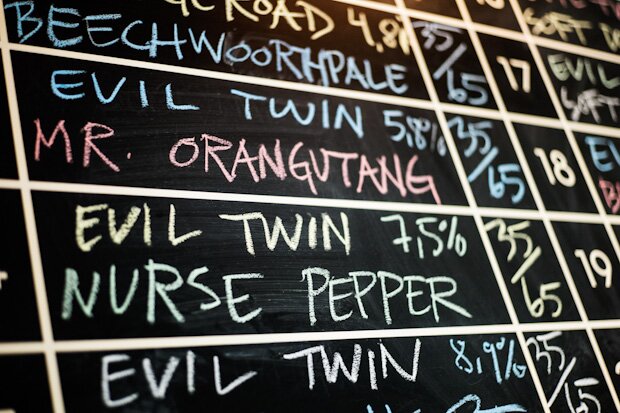
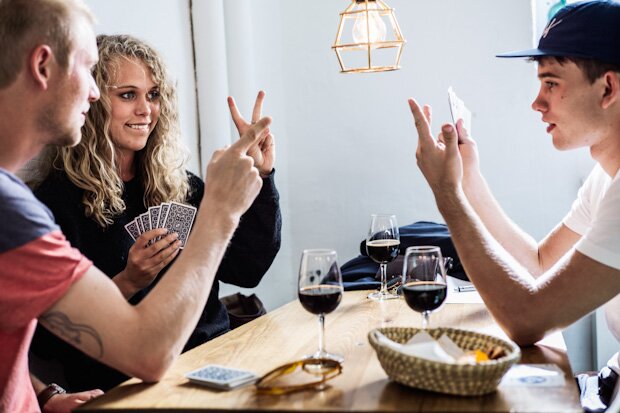
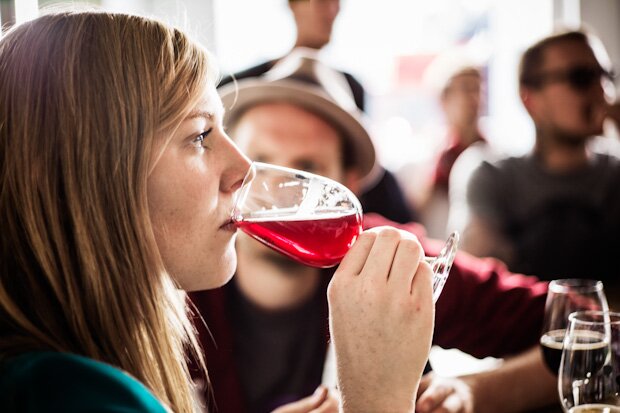
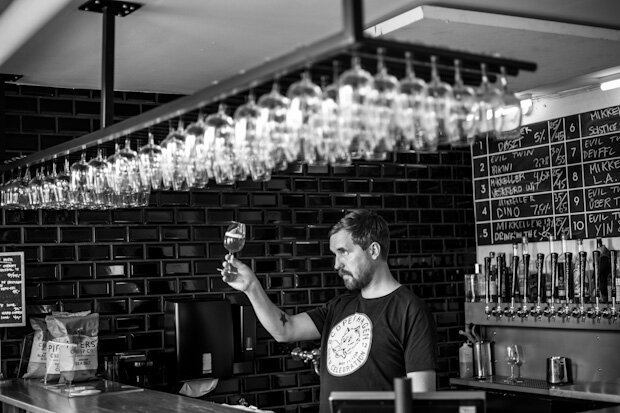
Then there’s the Mikkeller bar, located in a cellar in the heart of Copenhagen’s Vesterbro district, impractically small, with just a handful of carefully mismatched tables and chairs. With its bright white walls of rough plaster and exposed brick contrasted with shiny black tiles and an avocado floor, it’s all retro-modern, cosy-minimalist. Every detail is carefully chosen, from the bare lightbulbs hanging in gold cages, right down to the crisps (Pipers and Tyrells – the best, according to Bjergsø). The bar was designed by Danish design duo Femmes Regionales, and Bjergsø is proud of its slightly feminine feel. Beer is served from 20 keg taps in modest amounts (from between 25 cl and 65 cl, depending on the strength of the beer) at less modest prices.
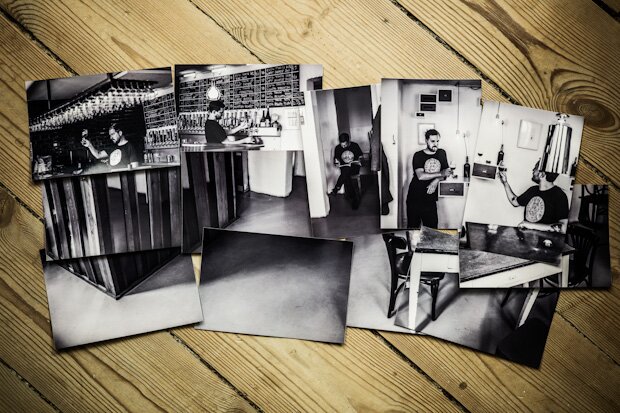
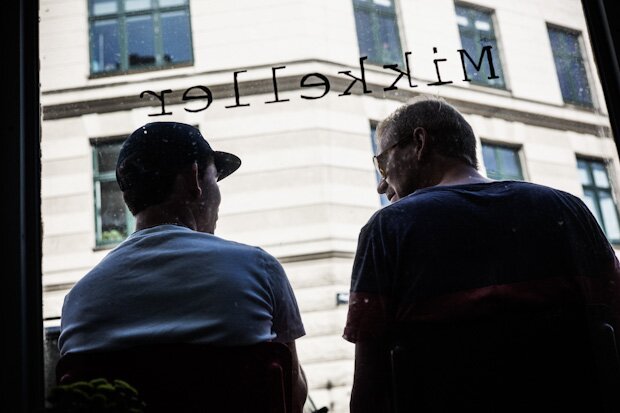
The bar even has a child’s high chair suspended from the ceiling of the chilled storeroom – originally brought in for Bjergsø junior, it’s available for anyone stopping by at the bar with a toddler in tow. This is not your typical local, even if locals do sometimes drink here. “We’ve had a lot of attention in Denmark since opening, and we got some pretty important prizes this year, so pretty much everyone in Copenhagen knows about this bar,” Bjergsø says. “When people come here, it’s to experience it. We have people coming from all over the world.”
So with the accolades piling up, with the practice of ‘gypsy brewing’ now almost a part of the brewing mainstream, and with Mikkeller’s position in the craft beer pantheon apparently well and truly cemented, where next? A second bar, an experimental brew pub this time, looks to be in the pipeline, but as someone who appreciates the small things in life – “We want people to still feel that we’re small,” he says, adding: “I don’t want a big, loud place.
I want a place where people can come and sit and relax and talk about the beer” – Bjergsø doesn’t really seem driven to build an empire. Others may set their sights on world domination, but his attitude is apparently much more laissez-faire.
“It’s not that it was my dream to become what I am now. It just happened. When I started Mikkeller the purpose was not to become a famous brewer that exports all over the world. I just wanted to make good beer,” he says. “I mean, I never think about the future – that we’re going to be this big, and we’re going to be this and that. We just take it one step at a time and grow organically.
We don’t have investors or anything. I want to grow with the business and see where I can take it, without going too crazy.” And if tomorrow it all comes tumbling down, Bjergsø doesn’t seem too concerned. After all, he has a plan B. “Maybe one day it’ll go the other way,” he shrugs, “and I’ll go back to being a teacher.”


Enjoy this article?
This is an excerpt from Hot Rum Cow Issue 2 which is available to buy in our shop. Buy magazine


Great post! I loved Mikkeller Bar. It really demonstrated the Danes cultural focus on hygge- sharing good times and good food / drink with friends or family in a cozy atmosphere.
I was just over there recently to interview Tore, who has roles in Mikkeller and To Øl.
My focus is a deeper look into the person behind the craft.
http://craftbeercoach.com/brewery-biography-tore-gynther-of-mikkeller-and-to-ol/