

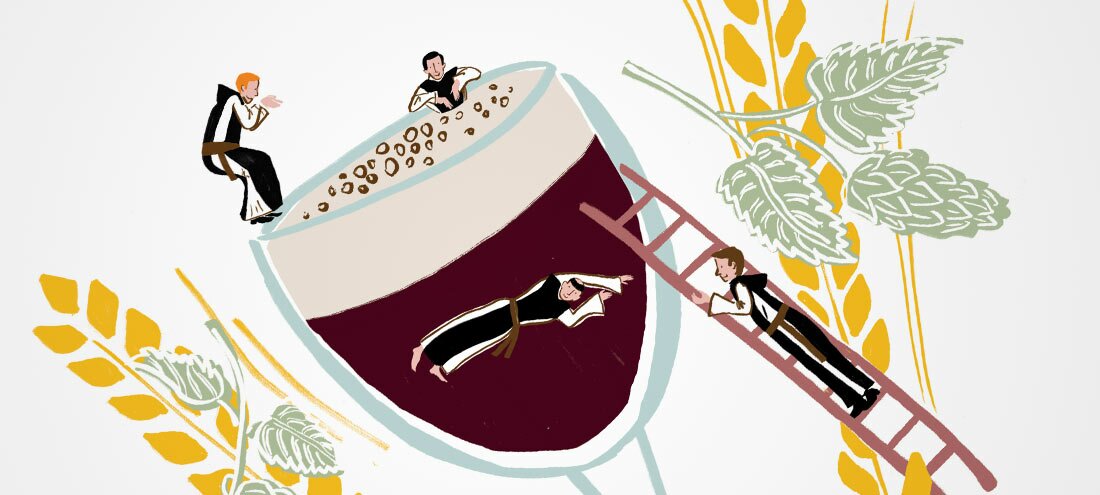
The curious anti-marketing of Westvleteren 12
Devoted to sobriety, the Trappist monks of Belgium’s Saint Sixtus Abbey nonetheless make a beer acclaimed as the best in the world. Welcome to a curious tale of anti-marketing, Montgomery’s trunk and deep apricot fruitiness
It’s early in the morning and mist hangs low across the fields. We’re the only travellers on the road but are not alone – the surrounding land conceals remnants of countless souls who perished here during the Great War. There are few more melancholy landscapes than the flatlands of Flanders.
Beetling down a country lane, we encounter a postwoman and ask her for directions. When she’s gone, the only sound is birdsong. This ghostly backwater may feel like the road to nowhere but it’s actually the road to the best beer in the world. We are heading to Saint Sixtus Abbey, the home of Westvleteren 12.
Our story starts long before the madness of World War I. Indeed the origins of the world’s greatest beer go back to a squabble between 17th-century monks in northern France. Disenchanted by what they perceived to be sliding standards amongst some of their brotherhood, a group of more principled monks broke away and formed their own organisation.
Based at La Trappe Abbey, they became formally known as the Order of Cistercians of the Strict Observance. Dedicated to a life of prayer and labour conducted almost entirely in silence, they are now better known as the Trappists.
Today there are about 170 Trappist monasteries and convents around the world. The Rule of St Benedict, upon which Trappist life is based, states that monks and nuns should “live by the work of their hands”. As a result, Trappist communities make goods that they sell to keep their communities going. For instance, some make bread, some make cheese and some – like Saint Sixtus – make beer.
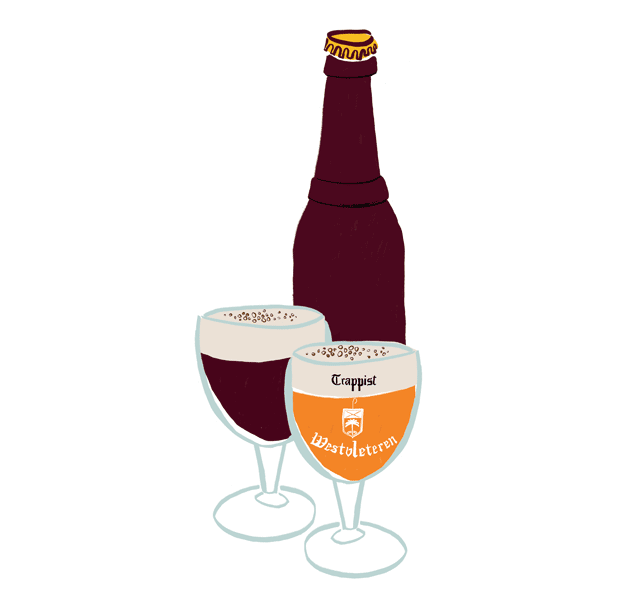
The thing is, it’s no ordinary beer. In 2005, contributors to the influential US-based review site RateBeer voted Westvleteren 12 to be the best beer in the world – a position it still holds today. Yet the Westvleteren beers are very hard to get hold of – and when demand far outstrips supply, interesting things happen.
Step forward, Mark Bode. The nature of the Saint Sixtus monks’ silent devotion means that they rarely speak to the world about their beer. However, having lived with them in their community and worked with them for several years, Bode knows them as well as anyone and acts as their spokesman. “People get angry and I’m the buffer,” he says, greeting us in the abbey visitor centre that he played a key role in developing.
The initial RateBeer accolade created huge demand for the beer. The monks have always insisted that they only want to make enough beer to fund their modest lifestyle – about 50,000 litres a year. Furthermore, the abbey had no interest in negotiating sales channels with distributors (unlike more commercially minded Trappist beer producers such as Chimay, which brews about 1.2m litres a year). Therefore, Westvleteren is not available in shops, bars or (except for some black market operators) online.
There are only two legitimate ways that the beer geeks of the world can get hold of Westvleteren 12 and the abbey’s two other beers, Westvleteren 8 and Westvleteren Blond. One is to make the trip to the visitor centre next to the abbey, where you can buy a maximum of six bottles (33cl) per visit. If you want a more substantial quantity, the alternative is rather more challenging. You can buy a maximum of five cases (each containing 24 bottles) by phoning the brewery on certain days specified on its website. After placing your order, you must then arrive at the brewery on a set day to collect the beer in a vehicle that has a registration plate tallying with your order. It’s an eccentric process that sees regular non-religious pilgrimages to the abbey. But it hasn’t always gone smoothly.
“After RateBeer, we couldn’t cope,” said Bode. “The telephone system crashed. We installed another one, then that crashed. Suddenly, everyone wanted to know about the monks and the beer. It was a clash of two different worlds that didn’t understand each other. A group of business people visited once and one of them said to the Abbot, “Sir, what is your management plan?” He replied: ‘Our plan since 1945 has been to brew 5,000 hectolitres a year. That is still our plan now.’ That wasn’t the answer they were looking for.”
There was also chaos when customers came to collect their beer. Long queues formed, with cars waiting for hours and revving their engines in frustration. There were even physical fights between people trying to edge up the line.
Many people thought the monks were crazy for not making more beer, and crazy for not charging more than they did. A case of 24 33cl Westvleteren 12 beers costs just €40 – less than €2 a bottle, and even less if you return the empty bottles and crate to claim your deposit.
But the monks are far from crazy. The beer is fantastic but their ‘anti-marketing’ approach has been instrumental in creating a demand that other commercial operators can only dream of.
Suddenly, everyone wanted to know about the monks and the beer. It was a clash of two different worlds that didn’t understand each other.
Furthermore, the monks of Saint Sixtus have made one spectacular exception to their production cap of 50,000 litres (5,000 hectolitres). In 2011 and 2012, they released two large extra batches of beer through commercial distributors and retailers around the world – around 160,000 cases in all. For once Westvleteren beer was available in bars and on supermarket shelves (no drive to Flanders required).
In a rare public comment, one of the monks, Brother Godfried, told the Financial Times: “It’s a one-off event. There is only so much beer that we can produce, or want to produce. It is only for this particular situation.”
That ‘situation’ was a desire to address the poor state of the abbey building by financing an €8m reconstruction steered by high-profile Belgian architect Bob Van Reeth. The plan worked. By increasing production and stockpiling supplies, the monks were able to fulfil the orders, netting a large contribution towards the building fund whilst giving beer lovers a better chance of buying their products (although the batches sold out very quickly). One wonders what Jan Baptist-Victoor would have made of it all?
Saint Sixtus Abbey was founded in the summer of 1831 by Baptist-Victoor, a hop farmer turned forest-dwelling religious hermit, who was joined by a group of monks from Catsberg Monastery in France. The brewery was established in 1838 and quickly found an admiring local market. The monks also habitually drank the beer with their dinner, and continue to drink a weaker not-for-sale 4% version of Westvleteren Blond today.
Despite the monks’ devotion to silence and sobriety, there have been dark days at the abbey. During the Great War, the abbey opened its doors to provide shelter and support to hundreds of refugees and 400,000 Allied troops stationed in and around the abbey estate.
When war returned two decades later, Field Marshal Montgomery (then a Major, but later head of the British forces) briefly stationed himself at the abbey in 1940 during the British retreat. Before leaving for Dunkirk, he asked the Abbot to look after a trunk for him. Assuming it to contain confidential documents, the monks hid the trunk and, when the German Army stationed themselves at the abbey, bricked it up in a wall. Rumours of the subterfuge spread, and one of the monks was reportedly taken to Ghent by German police for interrogation. Montgomery later wrote to the Abbot apologising for the stress he had put them through – the trunk had only contained personal belongings.
There are now just 20 or so monks living in the abbey. When we visited, the youngest monk was aged 48 and the oldest 102. “The monks attend the church seven times a day,” says Bode. “They rarely talk and they work hard. They wear black because it blends into nature, and the rooms of the abbey are all designed in strict proportion. It’s a place of silence and sobriety.”
And with that, our amiable host presents us with two greedily anticipated glasses of 10.2% ABV Westvleteren. It’s delicious. We toast sobriety. He drinks a coffee. It is, after all, only 9.30am.
The beers
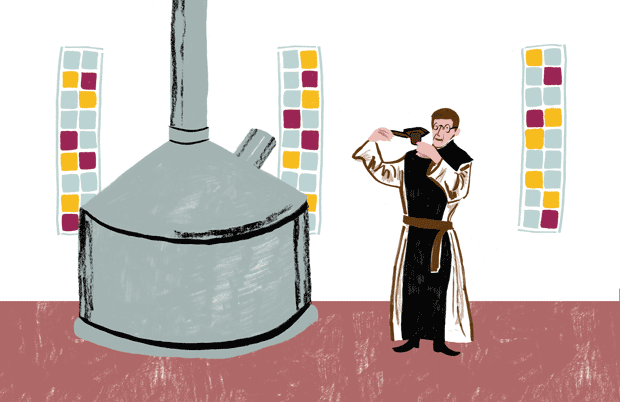
This is how three recent contributors to ratebeer.com described the Westvleteren beers:
Westvleteren 12 (10.2%)
“Chestnut brown. Aroma shows alcohol, wood, hint of smoke. Flavour notes highlight raisin bread, allspice, deep fruitiness (apricot), demerara. Long, sweet, silky malts in the finish, with dates and light bready notes. Ultra smooth.” – hoppybeerlover
Westvleteren 8 (8%)
“Pours a cloudy brown brew with a huge reddish head with good retention, aroma is moderate to heavy sweet and low bitter with clove, apple, banana, caramel and dark fruits, medium to robust bodied, flavor is moderate to heavy sweet and low bitter with a fresh and bitter sweet finish and a long aftertaste, very good.” – dalfaro86
Westvleteren Blond (5.8%)
“Hazy yellow colour, white foam. Medium carbonation. Light malty aroma with notes of grasses, light citrussy. Hoppy with bitter and dry finish. Easy drinkable.” – JefVerstraete
Blond is made using Hallertau and Target hops from the local hop fields of Poperinge; the two strong beers only use Target. The water is drawn from a local artesian well and the yeast comes from another Trappist Abbey, Westmalle.
Enjoy this article?
This is an excerpt from Hot Rum Cow Issue 6 which is available to buy in our shop. Buy magazine


Leave your comment